7.25.2012

installing . . .

wherein I flaunt my love of the grid while grumbling at its demands 
and then love it again.
unnamed (as of yet) #1-9. ink, oil, and water on vellum

7.11.2012

a blue to dive into

Erin Curry. work in progress. a more perfect shade of blue. 7ft x 3ft. acrylic on paper. 
Deep summer arrived a few weeks ago and, without air conditioning in the studio, by mid afternoon it feels like time to escape to water. My mammal mind must be traveling to the springs as this indigo blue has welled to the surface of these new large drawings worked while on the floor. No small amount of time was spent perfecting the color and it still shifts as the layers accrue one by one. Once the pages are dry, it takes standing on tiptoe to tack them to the wall layer by layer.

As with any new work, there's a bit of falling in love involved. I love the way the pale blue washes glow through the paper above and the way this particular paper wrinkles into little dimples when wet. I love that I've managed to convince the colors to separate a little as it dries, so the ink makes little dustings of pigment. Best of all is the sound. With the windows propped open in the attempt to keep cool(er), these drawings blow and crinkle in the current. My brother-studiomate was driven to tether them down while I wasn't there to stop the chatter of the pages, but I like to hear them talk when he's not around.


Part book, part print, part drawing, part installation, part soundscape: it's covering a lot of ground here with room to grow. 


During the ever important stare time -sometimes while literally waiting for the paint to dry- I'm dwelling on the mind as a fountain of associations when faced with abstraction and, in terms of process and creation, as a fountain of ideas. It seems commonsense, but sometimes east to forget: Action is Fertile.  Tilled ground is where planted seeds grow best.  Even my discards become valuable materials for experimentation with new treatments: crushing, waxing, oiling, inking, drawing, slicing, cutting. It's no coincidence Richard Serra's verb list is thrust into the hands of art students. The list is a map. If one gets stuck, just randomly point to the list and DO. 

Richard Serra. Verb List. 1967–68. Graphite on paper, 2 sheets, each 10 x 8" (25.4 x 20.3 cm). The Museum of Modern Art, New York. Gift of the artist in honor of Wynn Kramarsky. © 2011 Richard Serra/Artists Rights Society (ARS), New York


6.22.2012

in flight

 Remember the tiny inkblot kite I made?
Here it is flying on a blustery evening just as the sun set.


The soundtrack is by a new favorite band, DVA, who sweetly granted permission to use their song "lala" which matches so well the feeling of flying this little kite. Both make me deliriously happy.
Song is taken from album Botanicula soundtrack (2012)
Music and lyrics written by DVA © 2dva.cz 
Please support them, buy song/album here: dva2.bandcamp.com

6.13.2012

wings


We arrived for sea and sand just in time to gather for a late lunch under the trees and watch an afternoon storm stroll in. It scattered the fair weather tourists and left us with free rein of the shore.

While the others played in the surf, I walked down the beach whose ends were cloaked in mist and watched my silk wings flutter.

5.30.2012

Inkblot sequence animated

as a playful exercise during my coffee breaks today.

More tweaking and cleaning to follow, but I'm too delighted to wait.

Erin Curry, .gif, original art ink on vellum, 2012


4.18.2012

submerged

These two are the newest of a series that's been incubating in my studio for sometime now. They explore symmetry, the impulse to find closure in the abstract and the push/pull of an image not quite on the surface. Constructed in layers, it begins as an inkblot overlaid with a tangleprint made with graphite and handspun cotton thread and mounted on wood and finally wrapped in mylar. The mylar softens the whole image particularly because it doesn't quite lay flat on the surface. Looking at the work feels a little like looking through a fog at a strange reflection.
Erin Curry. drawing. tangleblot (same but different two). ink, handspun thread graphite print and mylar on wood. 6"x6" ©2012
Erin Curry. tangleblot (same but different ). ink, handspun thread graphite print under mylar on wood. 6"x6" ©2012

Erin Curry. drawing. tangleblot (same but different two). ink, handspun thread graphite print and mylar on wood. 6"x6" ©2012
Erin Curry. tangleblot (same but different ). ink, handspun thread graphite print and mylar on wood. 6"x6" ©2012

These left the studio as gifts for twin girls yet to be born. It felt appropriate that a developing idea might be given to new life and echoed the little warm knot memory of my own mother who was a twin. She and her twin developed a little mythos between them that always held an element of the sacred to me.


A dozen more are in the works as I experiment with altering colors and the mark the ink and graphite leave. They feel visceral, alien and insect-like by turns. The word "Oracular" rolls around and around in my mind as I make these. A circuitous route of associations and desires left whirling in their wake. These pieces seem connected to reading tea leaves and taking Rorschach tests. Though many see inkblots and immediately think "Rorschach test," that test is actually not just any inkblot, but a set of ten specific images used again and again to analyze a psychological state. I'm most interested in our general compulsion to find the recognisable in the abstract rather than the specific analysis of a person, though they seem interconnected.


Meanwhile my silklings are nearly-almost-maybe ready to cocoon. 

4.02.2012

cloud collecting

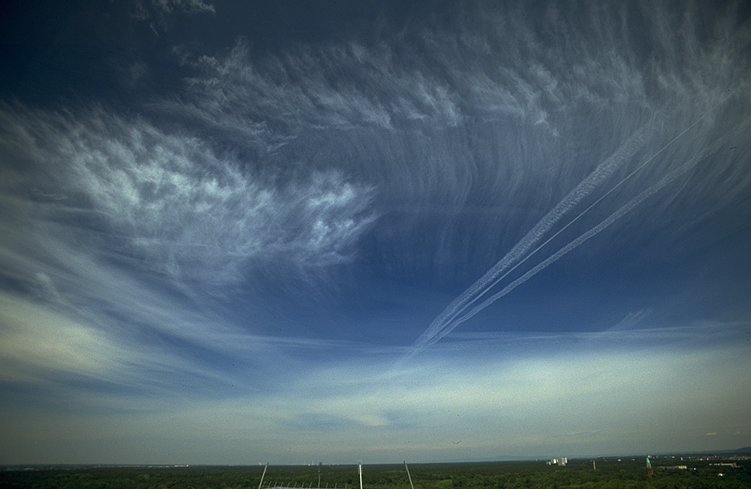
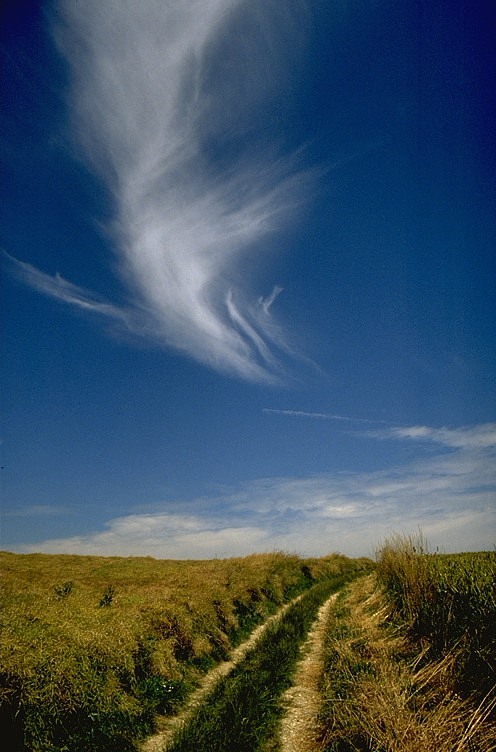
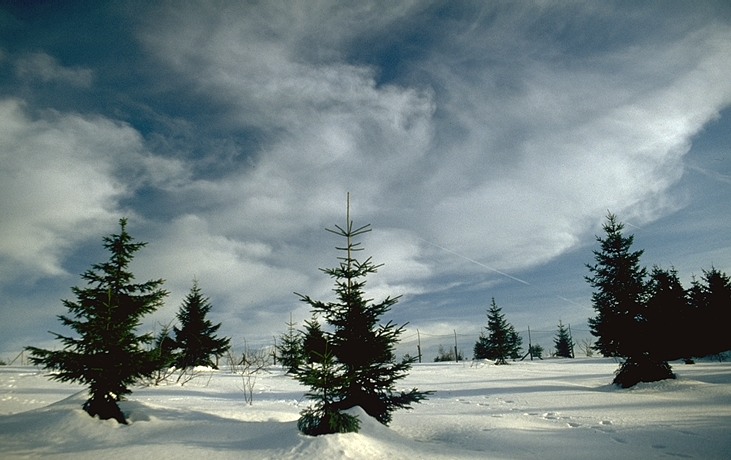
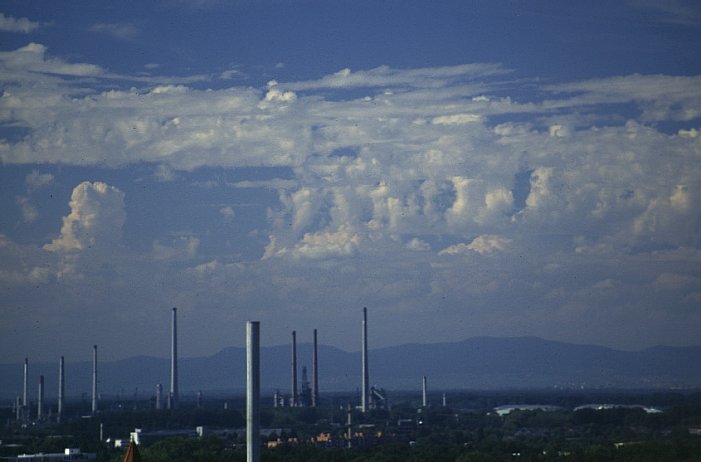
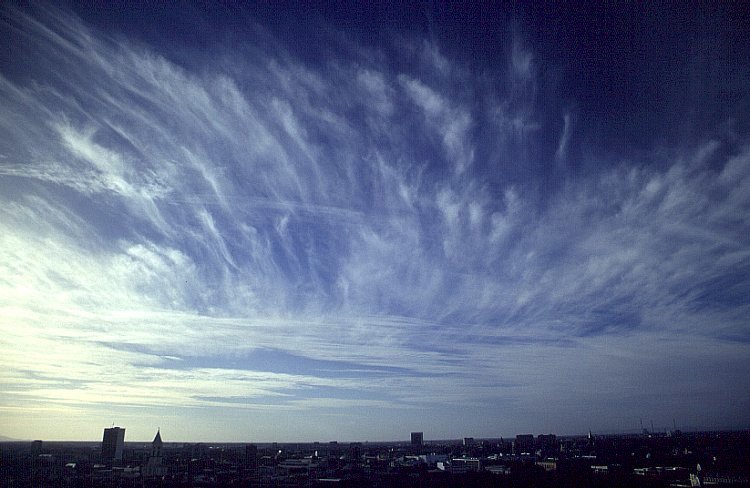
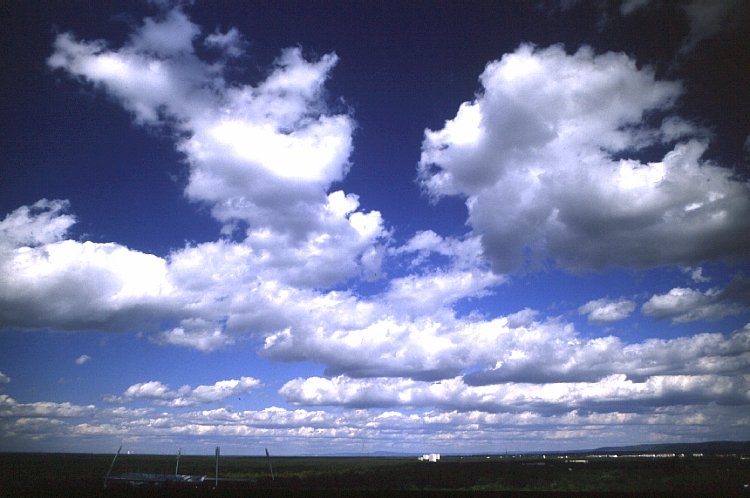
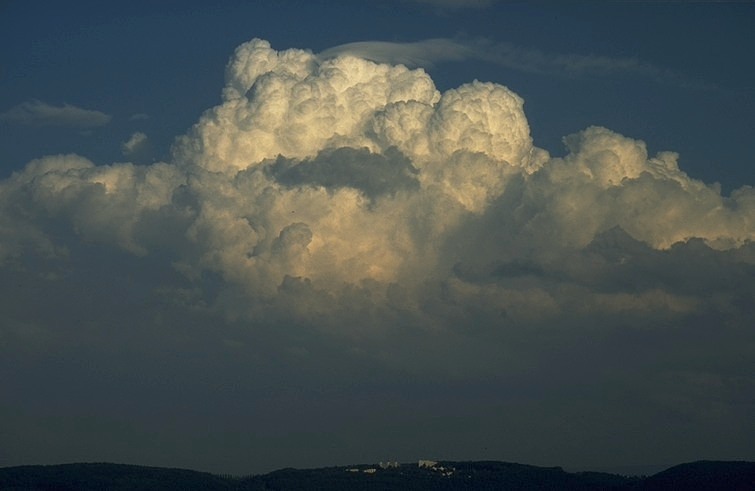
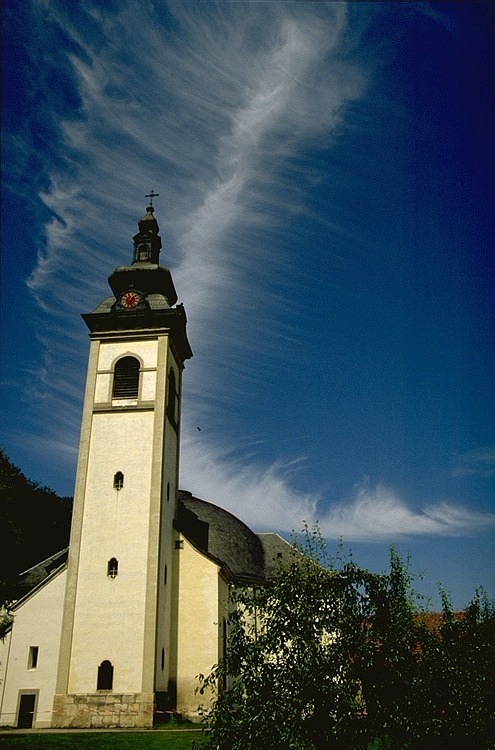
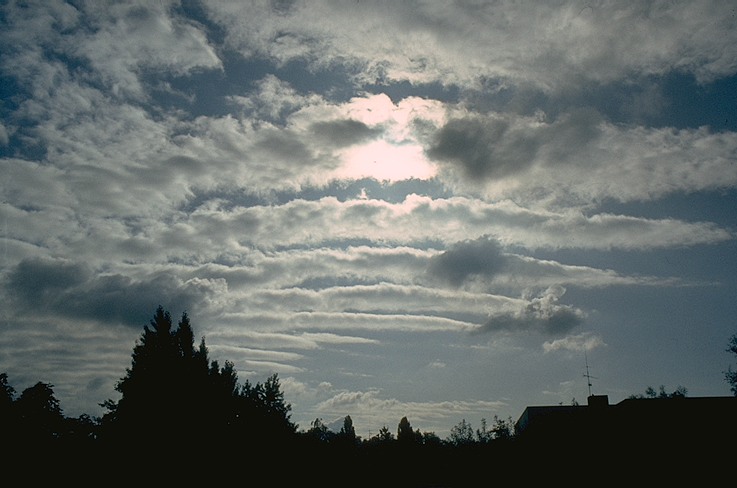
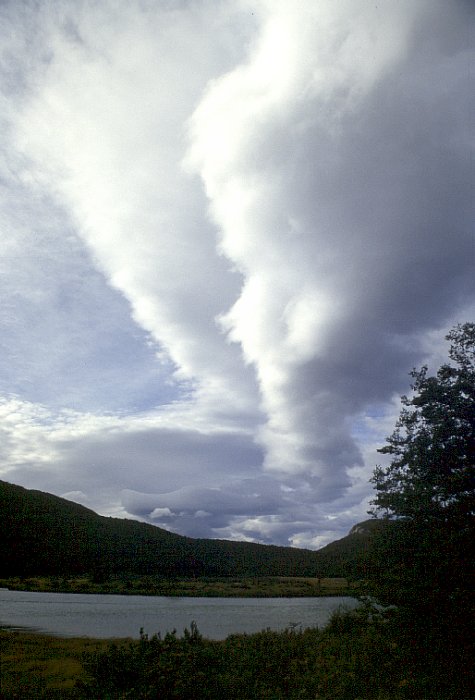
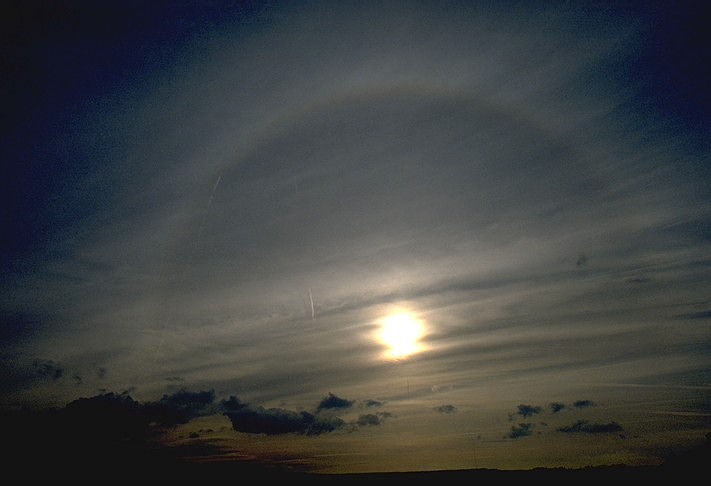
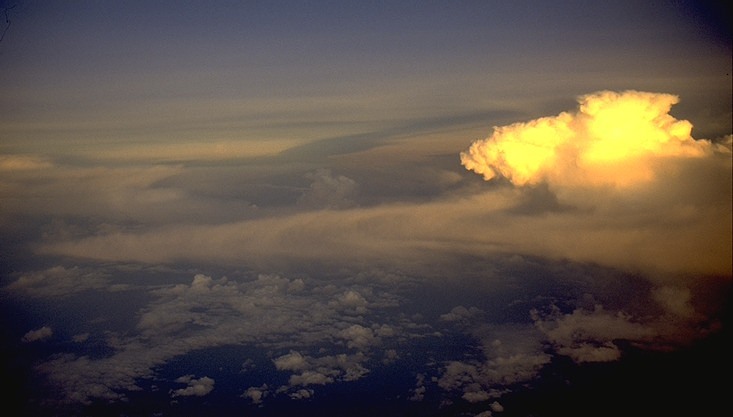
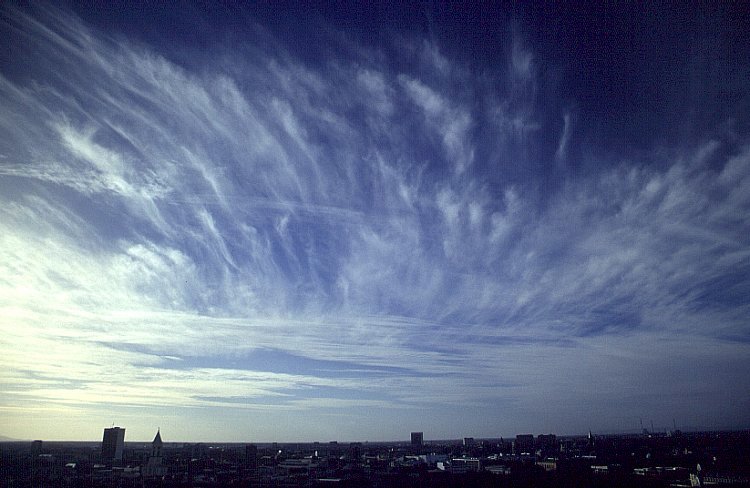
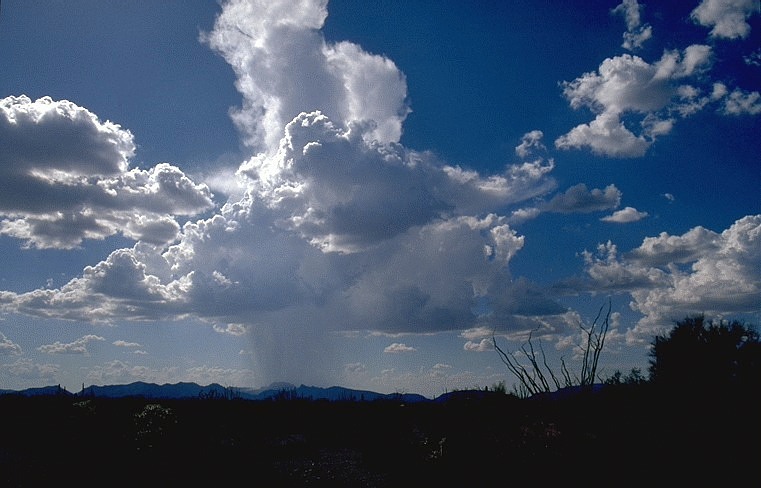
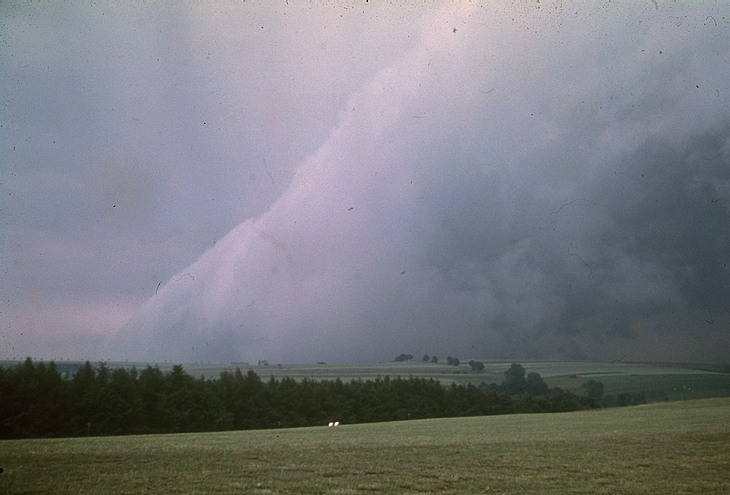
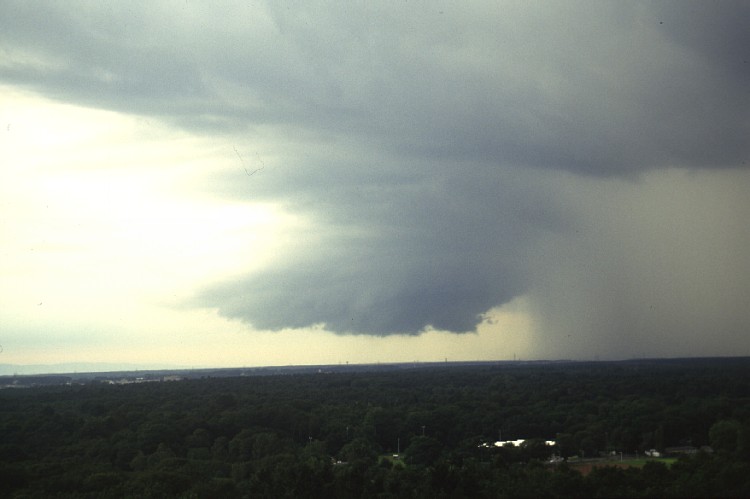
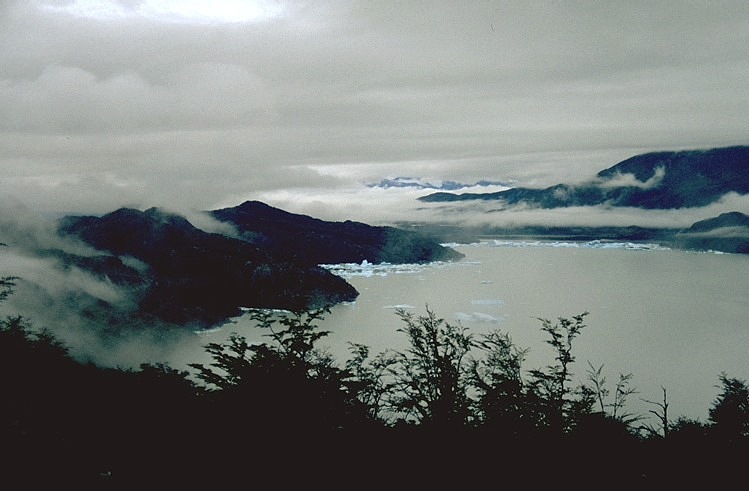
My recent research has included an increasing number of cloud captures. Powerlines still make their appearance too, but mostly it's the clouds with wisps I'm captivated by.
Browsing in a dusty used bookstore serendipitously turned up a Cloud Atlas which teaches one how to identify cloud species. Apparently clouds, like plants and animals, have latin species, genus names, and even matrilineage.

One I found online reads like poetry:

"Fibrous, threadlike, white feather clouds of ice crystals, whose form resembles hair curls." (of cirrus)

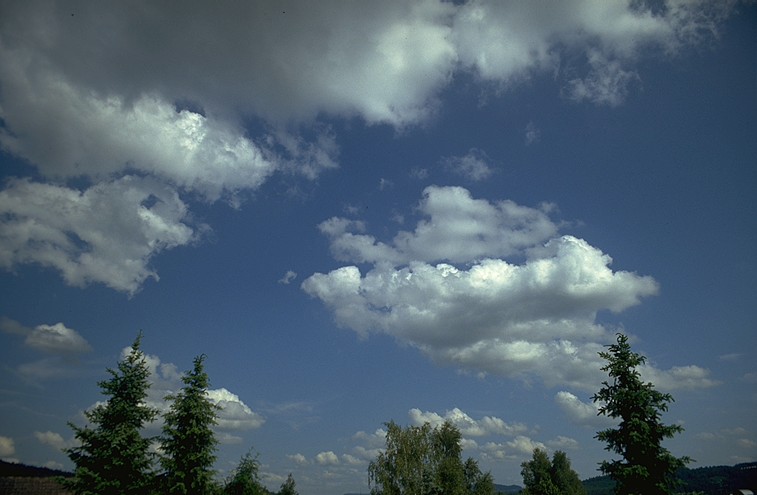
"Heap cloud with flat basis in the middle or lower level, whose vertical development reminds of the form of towers, cauliflower or cotton." (of cumulus)

In another, the latin roots are broken down,
cumulus to "heap"
stratus to "layer"
cirrus to "curl of hair"
altum to "height, upper air"
nimbus to "rain"

the genera presented and linked to photographs,
and then (and then!) the species are described with all the respect and awe of a witness to the ephemeral


fibratus
uncinus
spissatus
castelanus
floccus
stratiformis
nebulosus
lenticularis
fractus
humilis
mediocris
congestus

possessing filaments
hooked
to make thick
castle
tuft of wool
layer appearance
nebulous
lentil
to fracture
near ground, small
medium
to heap up

cirrostratus fibratus
cirrus uncinus
cirrus spissatus
altocumulus castelanus
cirrus floccus
altocumulus stratiformis
stratus nebulosus
altocumulus lenticularis
cumulus fractus
cumulus humilis
cumulus mediocris
cumulus congestus


that not being enough, there's varieties to contend with,

intortus
vertebratus
undulatus
radiatus
lacunosus
duplicatus
translucidus
perlucidus
opacus

to twist
having vertebrae
having waves
being radiant
having holes
double
transparent
light pass through
shadowy, thick

and supplements and accessories,

incus
mamma
virga
praecipitatio
arcus
tuba
pileus
velum
pannus

anvil
udder
stick
a fall
bow, arch
trumpet
cap
sail of ship
piece of cloth, shred

Does it get any better than that?

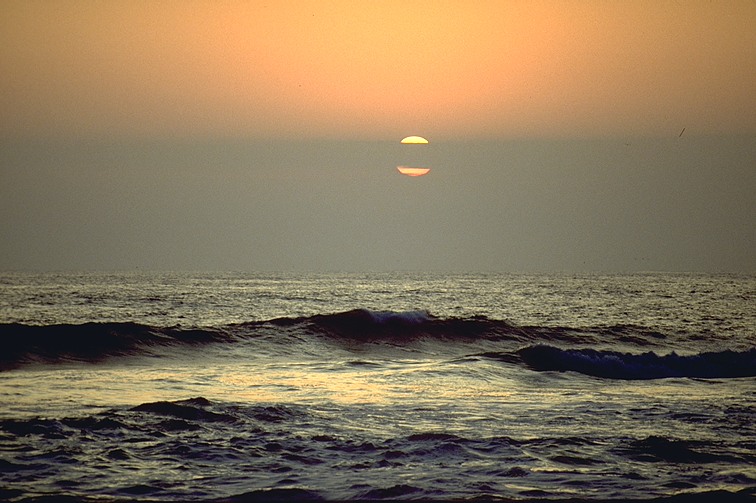
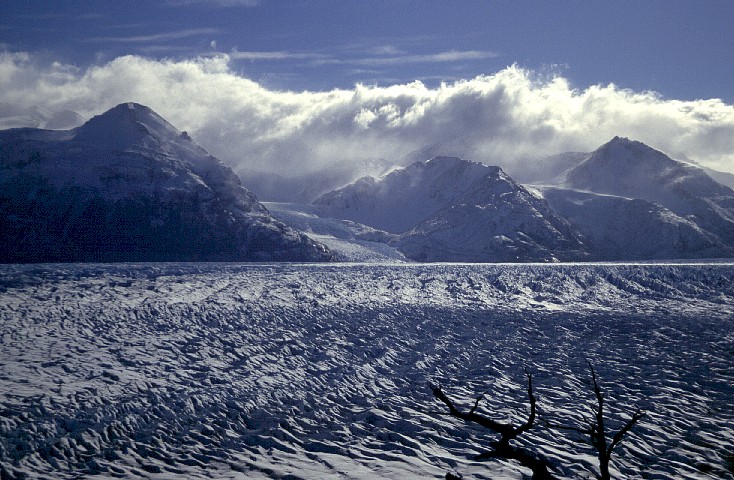
From my own continually growing cloud collection:

3.13.2012

petriwomb

of silk seeds. Expectant.

Warnings ring in my ears of busy days to come. For now, waiting for a change in hue from drabgreen to bluegray.


Day five of egg watching.

studio siblings

My brother and I are studiomates. We work in an old, dusty, leaky warehouse we affectionately call Orange Blossom Studios. The building was once upon a time a Coke-a-Cola bottling factory, and then a dry cleaners and perhaps even a machine shop, but has held artists now for over two-and-half decades, if not longer. In fact, until recently, it housed the work of my sculpture professor from my bachelor program, still houses one of my other sculpture teachers, and now houses Cindy, my recent showmate, along with a couple other sculptors and ceramicists. 

For years I worked out of a tiny -and the only- bedroom in our apartment. When the opportunity to move in with another artist in January of 2011, I felt I could finally breathe. Suddenly I had multiple workstations and could move nearly seamlessly between them to accommodate different series and stages of work. A space to hang up work and live with it a little while could happen and significantly I was away from the seductive glow of my computer. It gave me a sense of freedom and renewed purpose. Much of my productivity over the last year is thanks to it.  
Part of the benefit was having the company of a few other artists, even if our only interaction during the week was the call across the echoing space to say hello, or seeing the ever shifting landscapes of each other's desks. This sustained me somehow. Knowing others were Here.At.Work.Producing.Art meant I was pushed, or more accurately inspired, to stretch my hours even when the work wasn't coming easily or involved mind-numbingly boring sanding. Even the dusty materials and sculptural skeletons of my prior teachers held in storage seemed like they were were there as reminders of where I was headed. 

Later, there was a brief time where I was the only other working artist there and my pace seemed to slow, the space felt not only dusty, but somehow stale.

When Colin expressed interest in sharing my studio (and splitting rent), I jumped. He moved in shortly after and it's been a natural transition for both of us. His work seemed to almost immediately take on a particular focus and I find myself energized by the company of his work. Sharing a studio with him is lovely in a way my childhood-self wouldn't have appreciated, but it warms me to have my brother working there so much even when our studio schedules don't often synchronize.
one of the rare occasions we've ended up working at the same time
He's been working two series of work I'm rather excited about, Unmind and a long term series of Portraits of his friend Nic Bravo which he introduces here.
Colin Curry. Nic #3. oil on canvas. 16"x20". 2011
In a rather sweet turn of events, we were both accepted into a show this month, Below the Belt, presented by a new arts organization here in Gainesville. It's Colin's first serious exhibition and the work he made for it is ambitious. I couldn't be more pleased.
Colin Curry. Suspension. oil on panel. 72"x80". 2011

3.10.2012

silk seeds

Projects abound in my studio and life right now, but an extra special one I've been thinking about since last fall has begun to manifest.

200 silk seeds arrived in the mail yesterday.


Don't they look a bit like something you'd sprinkle on bread? They are silkworm eggs and will probably hatch in the next week or so as long as they are kept between 78-88°F. At the moment the pilot light of the range in my kitchen proves to be the source for an effective, if untraditional incubator.

I picked up a book to help illustrate the tiny scale of these dots glued to a petri dish and, unexpectedly, the page I opened to says this:
That's also to say that usually -but not always- the piece you produce tomorrow will be shaped, purely and simply, by the tools you hold in your hand today. In that sense the history of art is also the history of technology. The frescos of pre-Renaissance Italy, the tempera paints of Flanders, the plein aire oils of Southern France, the acrylics of New York City -each successive technology imparted a characteristic color and saturation, brushstroke and texture, sensuality or formality to the art piece. Simply put, certain tools make certain results possible.
Your tools do more than just influence the appearance of the resulting art -they basically set limits upon what you can say with an art piece.
-Bayles & Orland, Art & Fear, pg. 58, 1993

This concept is central to my fascination with materials and one of the reasons I decided to raise silkworms from egg to silk in the first place. It feels very much a natural evolution from my other spun work where I spin thread by hand to hand-raising a creature that spins its own thread. Beyond simply reeling the silk at the end, I hope the process of raising them will prove a few of my hypotheses true while revealing unexpected possibilities. I'm hoping as well for luck at being a good cat(erpillar) shepherdess.

My local friends, please keep an eye out for mulberry trees and let me know where you see them. I'm beginning a map and they'll be hungry when they wake and hungrier still by the end of a month.

LinkWithin

Related Posts Plugin for WordPress, Blogger...